
Y no nos referimos solo a easy o difficult sino a frases como: esto es pan comido, está tirado, lo hago con los ojos cerrados…¿quieres saber cómo decir que algo es fácil (o difícil) en inglés?
Vamos a ver primero cómo decir que algo es fácil en inglés. Una de las expresiones más comunes es tan sencilla como decir it’s a piece of cake, que es el equivalente a nuestro es pan comido, está chupado. Otra de nuestras favoritas es it’s not rocket science, rocket science sería algo así como la ciencia para construir cohetes, y usamos esta expresión cuando algo no puede ser tan difícil, vamos que no será para tanto, no? A continuación puedes ver más frases para saber cómo decir que algo es fácil en inglés.
WAYS TO SAY SOMETHING IS EASY
Easy peasy. (Es super fácil)
It’s a piece of cake. (Es muy fácil, es pan comido)
It’s as easy as pie. (Es muy fácil, es pan comido)
It’s a breeze. (Es muy fácil, es pan comido)
It’s a doddle. (Es muy fácil, es pan comido)
It’s a cinch. (Es muy fácil, es pan comido)
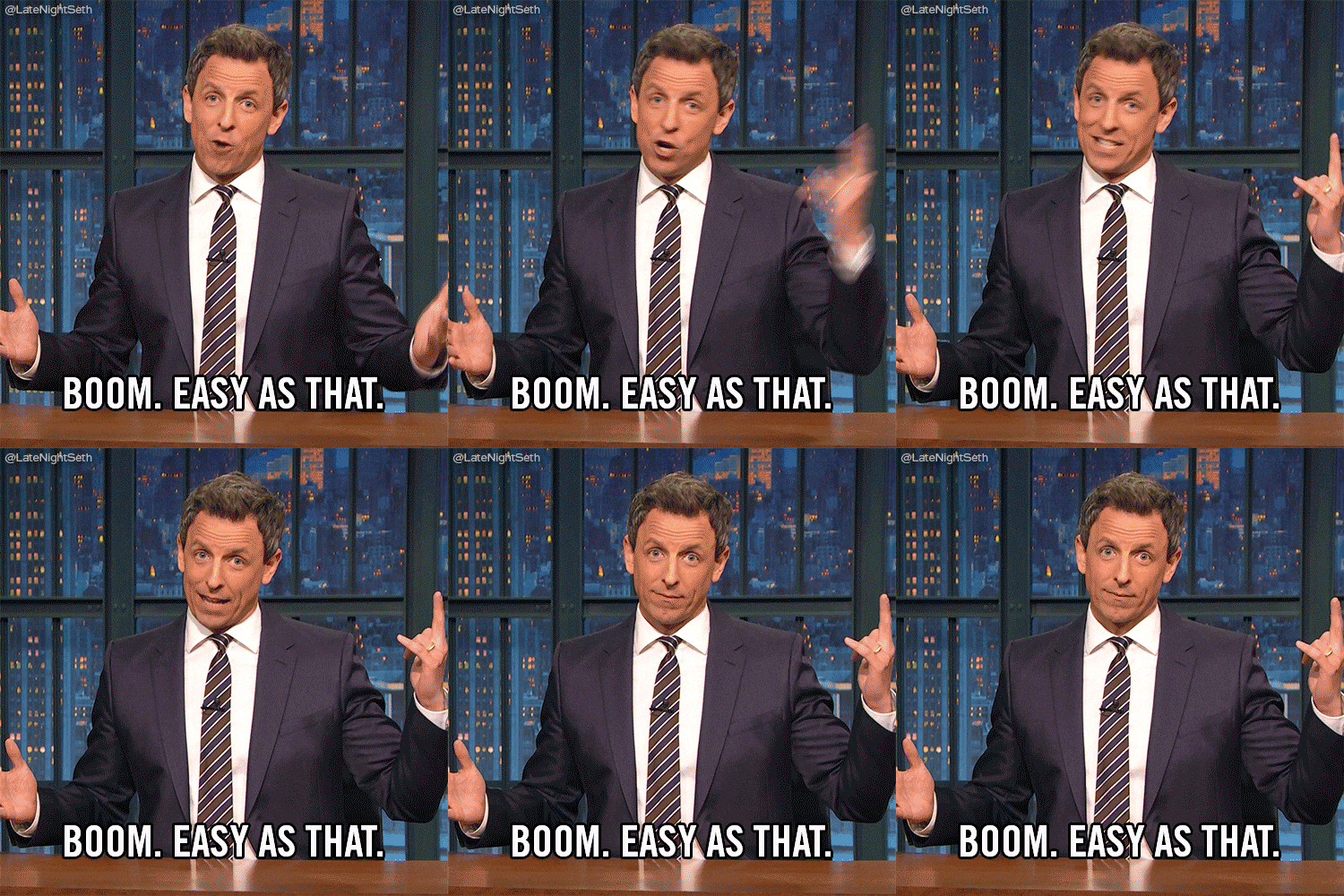
Seguimos con más alternativas para decir que algo es fácil, éstas son un poquito (pero solo un poco) más largas
Anyone can do it. (Cualquiera puede hacerlo)
It’s child’s play. (Es un juego de niños, es muy fácil)
It’s a walk in the park. (Es un paseo por el parque, es muy fácil)
It’s not rocket science. (No es “ingeniería aeroespacial”, es fácil)
You can do it with your eyes shut. (Puedes hacerlo con los ojos cerrados)
You could do it in your sleep. (Podrías hacerlo mientras duermes)
I could do it with one hand tied behind my back. (Podría hacerlo con una mano atada a la espalda)
Ya tienes dónde elegir! Ahora vamos a ver cómo decir que algo es difícil en inglés
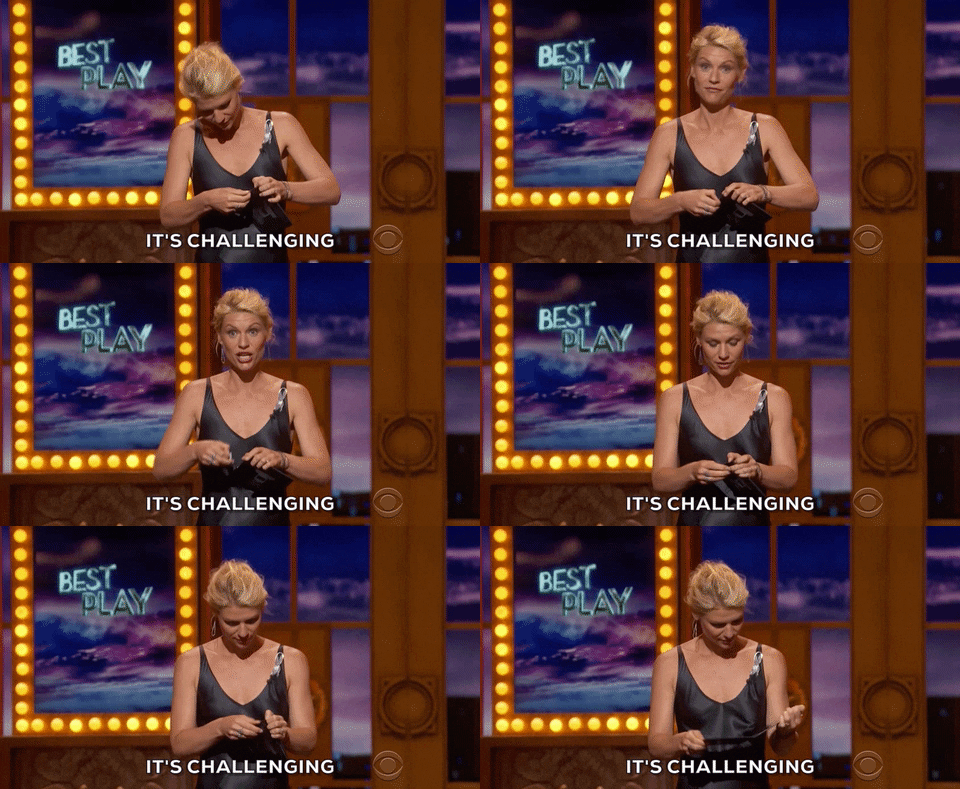
Pues sí, hay cosas que no son tan fáciles como parecen y una manera más polite de decir que algo es difícil puede ser it’s challenging. Challenge es un reto, un desafío, así que ya vemos por dónde va la idea. Más formas de decir que algo es difícil
WAYS TO SAY SOMETHING IS DIFFICULT
It’s not so easy. (No es tan fácil)
It’s not as easy as it looks. (No es tan fácil como parece)
It’s quite difficult actually. (Es bastante difícil, de hecho)
It’s a bit tricky. (Tiene truco, es un poco complicado)
It isn’t a walk in the park. (No es un paseo por el parque, no es fácil)
It’s not the easiest thing in the world. (No es la cosa más fácil del mundo)
It’s quite tough at times. (Es bastante duro/difícil a veces)
It’s a bit hard going. (Es un poco duro/difícil)
This job is quite demanding. (Este trabajo es bastante exigente)
This job is not for the faint-hearted. (Este trabajo no es para los débiles de corazón)
It’s not for the inexperienced. (No es para inexpertos)
It’s tricky to get it right. (Es difícil hacerlo/entenderlo bien)
It can be a nightmarish experience. (Puede ser una experiencia de pesadilla)
Si además de saber cómo decir que algo es fácil en inglés o que es difícil, quieres aprender más frases cortas de uso habitual, no te pierdas estas 80 expresiones útiles
¿Cómo de fácil ha sido aprender estas frases? Was it a piece of cake? A walk in the park? O más bien a bit tricky? Cuéntanos cuál es tu favorita, ¿sabes alguna otra?

Hey buddies, el post de hoy es una recopilación de errores comunes en inglés que cometemos a menudo, a veces porque cambiamos la preposición que toca, o porque nos equivocamos con una palabra o también porque traducimos literalmente. Ponte cómodo porque te detallamos nada más y nada menos que 30 common mistakes que no debes cometer más.
1 We say coworkers, work mates or colleagues, not partners para referirnos a nuestros compañeros de trabajo
 My partners are really helpful.
 My coworkers are really helpful.
2 We say at work, not in the job en expresiones como
I sometimes surf on the internet in the job.
I sometimes surf on the internet at work.
3 We say hire mejor que contract, cuando contratamos a un empleado
Things are going well, we will contract more employees.
Things are going well, we will hire more employees.
4 We say a business grows, not grows up para decir que el negocio crece
Our business is growing up and increasing sales.
Our business is growing and increasing sales.
Utilizamos grow up para referirnos a las personas cuando crecen / maduran
He’s now a grown up person.
Children grow up really fast.
5 We say I agree, not I am agree para mostrar nuestro acuerdo
I am agree with your idea.
I agree with your idea.
6 We say I think so / I don’t think so, not I think that yes / no para decir creo que sí / no
Would you come? I think that yes / no.
Would you come? I think so / I don’t think so.
7 We say I have no idea, not I don’t have an idea para decir no tengo ni idea
Is she here? I don’t have an idea.
Is she here? I have no idea.
8 We say leave me alone, not leave me in peace cuando queremos que nos dejen en paz
Please, leave me in peace, I’m busy now.
Please, leave me alone, I’m busy now.
9 We say from now on, not since now para decir de ahora en adelante
We will have new regulations since now.
We will have new regulations from now on.
10 We say so far, not until now para decir hasta ahora, hasta este momento
What have they done until now?
What have they done so far?
11 We say it depends on, not it depends of
I don’t know what I’m going to do tomorrow. It depends of the weather.
I don’t know what I’m going to do tomorrow. It depends on the weather.
12 We say related to, not related with
This is a problem related with the internet signal.
This is a problem related to the internet signal.
13 We say contact someone, not contact with someone
I’ll contact with her because I need more information.
I’ll contact her because I need more information.
14 We say trust someone, not trust in someone
I trust in my employees to do a good job when I’m not in the office.
I trust my employees to do a good job when I’m not in the office.
15 We say worry about, not worry for algo o alguien
Her mother worries for her a lot.
Her mother worries about her a lot.
16 We say think about / of, not think in. Si imaginamos algo, utilizamos think of / about, si estamos considerando algo utilizamos think about
I’m thinking in my future and deciding what I want to do.
I’m thinking about my future and deciding what I want to do.
17 We say similar to, not similar than
This app is very similar than another one.
This app is very similar to another one.
18 We say the same as, not the same than or the same to
He’s the same than his father. They have similar personalities.
He’s the same as his father. They have similar personalities.
19 We say in the world, not of the world para decir del mundo
Lionel Messi is one of the best soccer players of the world.
Lionel Messi is one of the best soccer players in the world.
20 We say arrive in/at a place, not arrive to a place
I arrived to work at 9 a.m.
I arrived at work at 9 a.m.
We use arrive in con lugares como ciudades (London, Paris, etc.).
We arrived in Paris last Friday.
We use arrive at al referirnos a un sitio en concreto (the bank, the restaurant, work, home, etc.).
They arrived at the restaurant 20 minutes late.
21 We say go home, not go to home
She decided to go to home after the theatre.
She decided to go home after the theatre.
22 We say parking lot, not parking para referirnos a un aparcamiento
The parking was full, so we parked on the street.
The parking lot was full, so we parked on the street.
23 We say on the bus / train / plane, not in the bus / plane / train
Sometimes I read when I’m in the bus.
Sometimes I read when I’m on the bus.
We say in with cars, vans, trucks, etc.
Let’s get on the car.
Let’s get in the car.
24 We say to miss, not to lose a bus / train / plane
You will lose the train if you don’t hurry up.
You will miss the train if you don’t hurry up.
25 We say waste time, not lose time para decir perder el tiempo
Sam loses a lot of time watching TV.
Sam wastes a lot of time watching TV.
26 We say spend time, not pass time para decir pasar tiempo con
On the weekend, she likes to pass time with her husband.
On the weekend, she likes to spend time with her husband.
27 We say to have (or to throw) a party, not to make or do a party
They are making a party next Saturday.
They are having / throwing a party next Saturday.
28 We say to have a drink, not to take a drink
Let’s take a drink after work.
Let’s have a drink after work.
29 We say to sunbathe, not to take the sun
She loves taking the sun on the beach.
She loves sunbathing on the beach.
30 We say to make mistakes, not to have errors or have mistakes.
My English is okay, but I have a lot of mistakes.
My English is okay, but I make a lot of mistakes.
No te preocupes si te identificas con algunos (o muchos) de ellos, son los errores más comunes que cometemos los hispano hablantes. Anota con los que más te equivocas para repasarlos, pero vuelve a esta lista siempre que lo necesites o tengas dudas.
PS: Si te atreves con más meteduras de pata typical Spanish, lee este post sobre false friends